



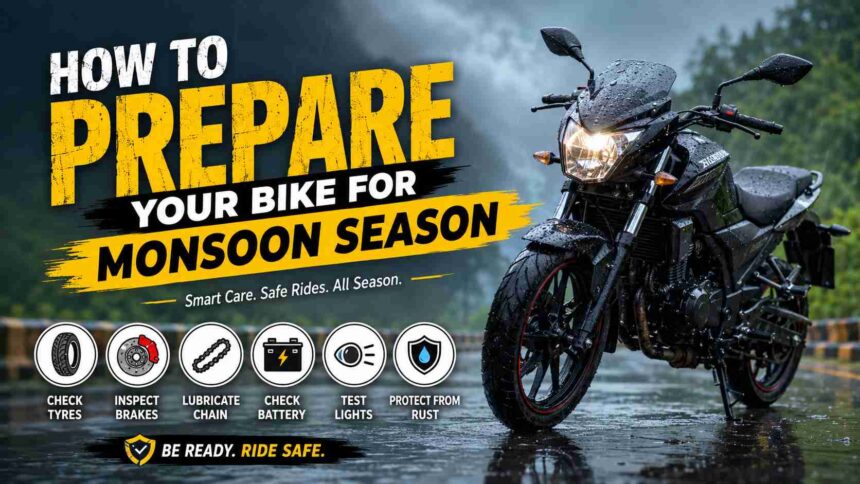
The monsoon season brings cool weather, fresh air, and beautiful roads. But for bike riders, it also brings slippery roads, potholes, poor visibility, and unexpected breakdowns. Rainwater, mud, and moisture can damage your motorcycle if you do not take proper care.
That is why learning How to Prepare Your Bike for Monsoon Season is important. A few simple checks before the rains can improve your bike’s performance, increase safety, and help you avoid expensive repairs later.
Whether you ride every day for work or enjoy weekend rides, this guide will help you keep your motorcycle ready for every rainy ride.
Why Monsoon Bike Maintenance Matters
Rainwater may look harmless, but it can affect many parts of your motorcycle. Water mixed with dirt can damage the chain, reduce braking performance, and even cause electrical problems.
Regular maintenance during the rainy season helps you:
- Ride safely on wet roads.
- Prevent rust and corrosion.
- Improve braking performance.
- Increase tyre grip.
- Avoid sudden breakdowns.
- Extend the life of your motorcycle.
Preparing your bike before the rainy season is much easier than repairing damaged parts later.
1. Check Your Tyres Carefully
Tyres are the only part of your bike touching the road. During monsoon, good tyres can make a huge difference.
Inspect the tyre tread depth. If the grooves have become shallow, replace the tyres. Worn tyres cannot push water away properly, increasing the chance of skidding.
Also check:
- Correct tyre pressure.
- Sidewall cracks.
- Uneven tyre wear.
- Small cuts or punctures.
Always maintain the pressure recommended by your bike manufacturer.
2. Inspect the Brakes
Wet roads require stronger and more reliable braking.
Before the rainy season:
- Check brake pads.
- Inspect brake discs.
- Adjust drum brakes if needed.
- Check brake fluid level.
- Test both front and rear brakes.
If you hear unusual sounds while braking, get them inspected immediately.
Never ignore brake problems during monsoon.
3. Clean and Lubricate the Chain
Rainwater washes away chain lubricant quickly. A dry chain creates friction and wears out faster.
Follow these simple steps:
- Clean the chain with a chain cleaner.
- Remove mud and dirt.
- Apply good-quality chain lubricant.
- Check chain tension.
Repeat this process regularly if you ride frequently in rain.
4. Protect Electrical Components
Modern motorcycles have several electrical parts that can be affected by moisture.
Check:
- Battery terminals.
- Wiring connections.
- Headlights.
- Indicators.
- Tail lamp.
- Horn.
- Ignition switch.
Loose wiring can allow water to enter and create starting problems.
Apply electrical contact protector where recommended.
5. Test All Lights
Visibility becomes poor during heavy rain. Your lights help both you and other drivers.
Before monsoon, ensure that:
- Headlight works properly.
- High beam and low beam function correctly.
- Brake light is bright.
- Turn indicators work.
- Number plate light is working.
Replace weak bulbs immediately.
6. Replace Old Wiper on the Helmet Visor
Many riders focus only on the bike but forget the helmet. A scratched visor becomes difficult to see through in rain.
Clean your visor regularly. If visibility is poor, replace the visor before the rainy season. You can also use anti-fog solutions for better visibility.
7. Keep the Air Filter Clean
Rainy roads create mud and dust that can clog the air filter. A dirty air filter reduces engine performance and fuel efficiency.
Inspect the filter and clean or replace it according to the service schedule. Your engine will breathe better and run more smoothly.
8. Check Engine Oil
Engine oil plays an important role in keeping your engine healthy.
Before monsoon:
- Check oil level.
- Replace old oil if service is due.
- Look for oil leakage.
Fresh engine oil improves engine protection during changing weather conditions.
9. Inspect the Battery
Starting problems are common during rainy weather.
Check:
- Battery voltage.
- Terminal corrosion.
- Loose cables.
If your battery is already weak, replace it before the rainy season begins.
A healthy battery prevents unwanted trouble on rainy mornings.
10. Wash Your Bike After Rain Rides
Many riders think rainwater washes the bike naturally. Actually, rainwater carries dust, chemicals, and mud that stick to the motorcycle.
After riding in rain:
- Wash the bike with clean water.
- Dry it completely.
- Lubricate the chain.
- Wipe metal parts.
This simple habit prevents rust.
11. Protect Metal Parts from Rust
Moisture is one of the biggest enemies of motorcycles.
Use protective sprays or polish on:
- Chrome parts.
- Foot pegs.
- Nuts and bolts.
- Exhaust pipe.
Keeping the bike clean and dry is the best protection against rust.
12. Carry Essential Riding Gear
Preparing your bike is important, but preparing yourself is equally important.
Carry:
- Waterproof riding jacket.
- Rain pants.
- Waterproof gloves.
- Riding boots.
- Reflective vest.
- Waterproof backpack cover.
Good riding gear keeps you comfortable and improves safety.
13. Avoid Deep Water
Flooded roads may hide potholes and damaged surfaces. Even if your bike can cross shallow water, avoid riding through deep water whenever possible.
Water entering the engine or exhaust can cause serious damage. Take an alternate route if needed.
14. Ride Smoothly During Monsoon
Bike preparation alone is not enough. Safe riding habits matter even more.
Remember these simple tips:
- Ride at moderate speed.
- Maintain extra distance from other vehicles.
- Avoid sudden braking.
- Do not lean aggressively while cornering.
- Stay away from painted road markings.
- Watch out for potholes.
Patience is your biggest safety tool during rain.
Must Read: 10 Car Maintenance Habits That Save You Money and Extend Vehicle Life
Common Mistakes Riders Make During Monsoon
Many motorcycle owners unknowingly damage their bikes.
Avoid these mistakes:
- Ignoring worn tyres.
- Riding with weak brakes.
- Skipping chain lubrication.
- Parking in standing water.
- Delaying regular servicing.
- Ignoring electrical issues.
- Leaving mud on the motorcycle for days.
Small mistakes can lead to expensive repairs.
Final Thoughts
Knowing How to Prepare Your Bike for Monsoon Season is one of the smartest things every rider can do. Rainy weather can be enjoyable if your motorcycle is in good condition and you follow safe riding practices.
Simple maintenance like checking tyres, servicing brakes, cleaning the chain, inspecting electrical parts, and protecting your bike from rust can save you money and reduce the risk of accidents.
Do not wait until your motorcycle develops a problem. Spend a little time preparing it before the rains begin, and you will enjoy smoother, safer, and more confident rides throughout the monsoon season.
A well-maintained bike not only performs better but also gives you peace of mind every time you hit the road, no matter how heavy the rain gets.